TAMBURI
WEBBetaA full sampler engine for ASSEMBLY-7. Load your own audio into the polymetric machine — same drift, same phase accumulation, same controlled instability. Any sound becomes structural rhythmic material.
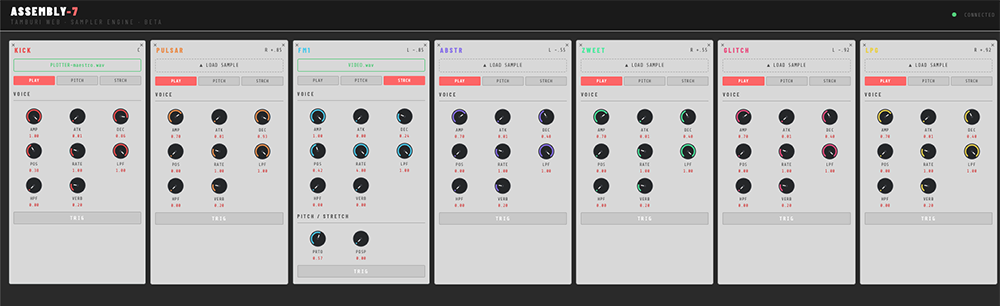
Tamburi Web — browser-based GUI · 7 sampler voices · real-time OSC control
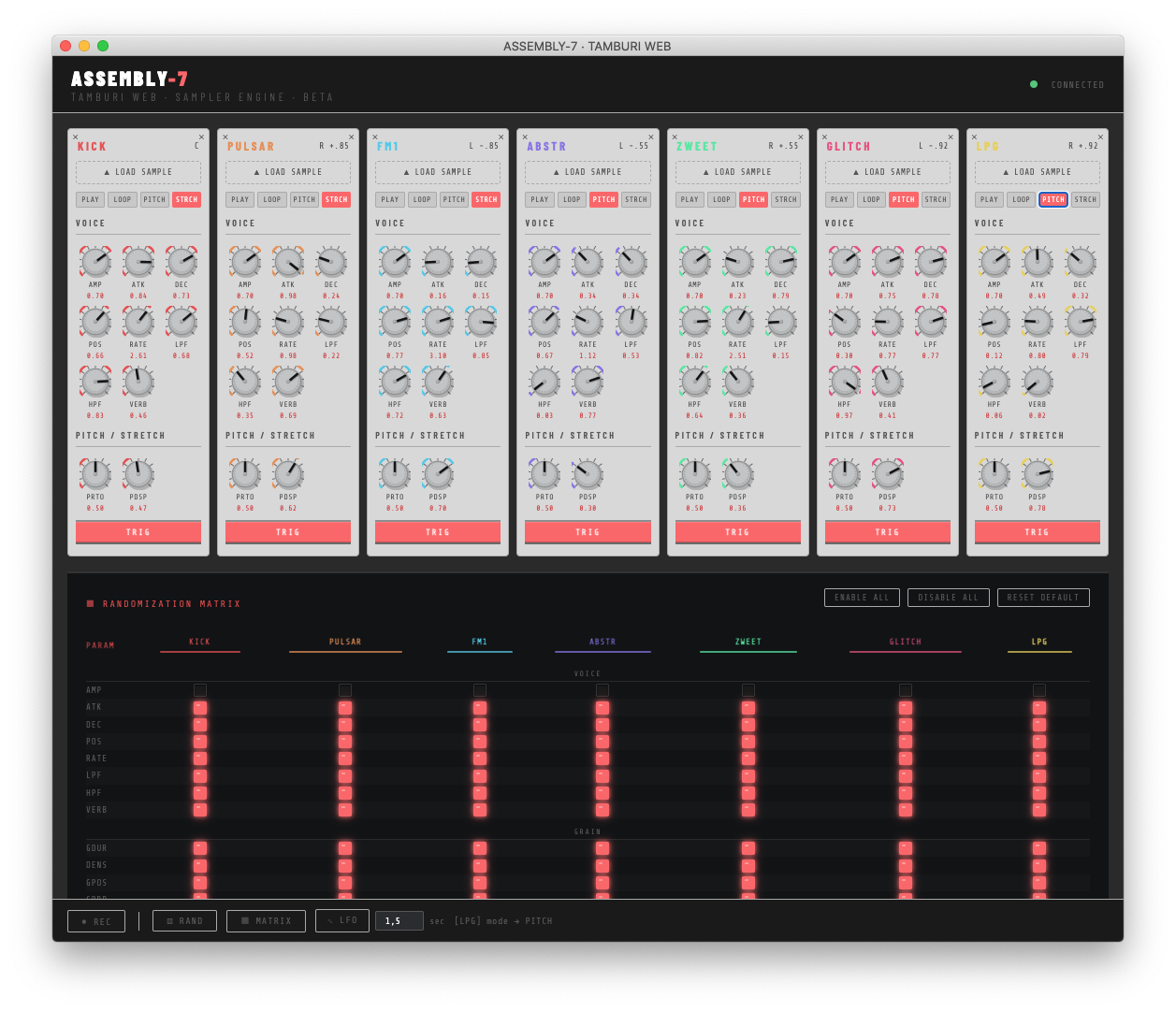
Parameter control · Scan LFO · Randomization Matrix · Stem recording
Engine 7 introduces a dedicated browser interface that runs entirely outside Max/MSP. A local Node.js server bridges the browser to Max and SuperCollider via OSC — handling sample loading, parameter changes, playback mode switching, randomization controls, and stem recording. Open the page in any modern browser and control the full engine without touching the Max patch.
What Engine 7 changes
ASSEMBLY-7 was built around 7 algorithmic synthesis voices — FM, noise engineering, physical modelling, recursive feedback. No samples. Only synthesis. That architecture remains entirely intact.
Engine 7 adds a parallel layer: a complete sampler engine that replaces the internal synthesis with your own audio material, while keeping every structural property of the sequencer unchanged. The drift, the polymetric logic, the independent BPM per line, the stem recording — all of it runs on your sounds.
The timbral range of the machine effectively doubles. Synthesis and sampling now coexist as two distinct sonic dimensions of the same instrument.
Three playback modes
Each of the 7 voices can run in one of three modes. Switch per voice at any time, even while the sequencer is running.
7 voices · fixed spatial positions
Each module holds a fixed stereo position in the mix. The spatial image is determined by the architecture — not by the sample you load.
Engine 7 produces no internal synthesis. Every module needs a sample loaded to produce sound. This is the design — the machine provides the rhythmic geometry, you provide the timbral material.
Everything that makes ASSEMBLY-7 work
Engine 7 is a drop-in replacement. The sequencer, the drift logic, the stem recorder — nothing changes.
Already in testing
A group of ASSEMBLY-7 users who left reviews during development are already running Engine 7. Their feedback is actively shaping how the engine evolves — from sample loading behaviour to playback mode refinements.
This is a beta release. It works, but behaviour may vary across systems and sample formats. If something unexpected happens, write to [email protected].
/ Randomization
Five tools for live parameter mutation — from single one-shot gestures to continuous automated drift with structural matrix morphing. All available directly in the browser GUI, no Max interaction required.
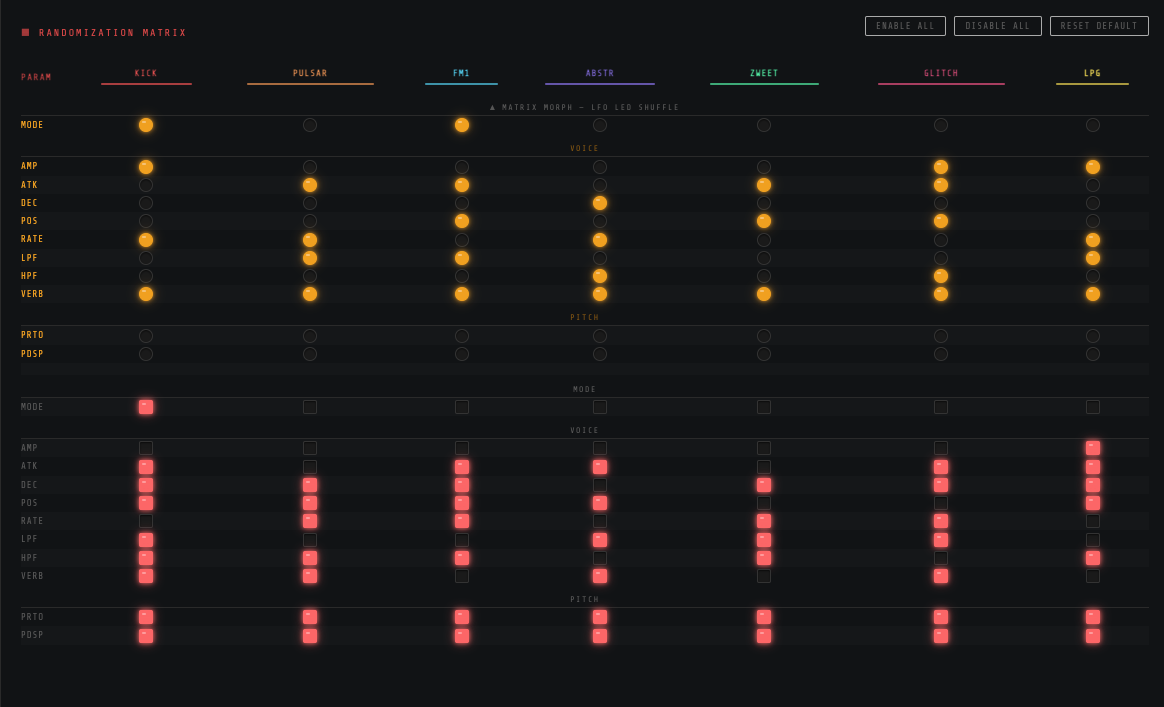
Matrix LED Shuffle — amber grid controls which LEDs the LFO can flip at each cycle
/ Watch it run
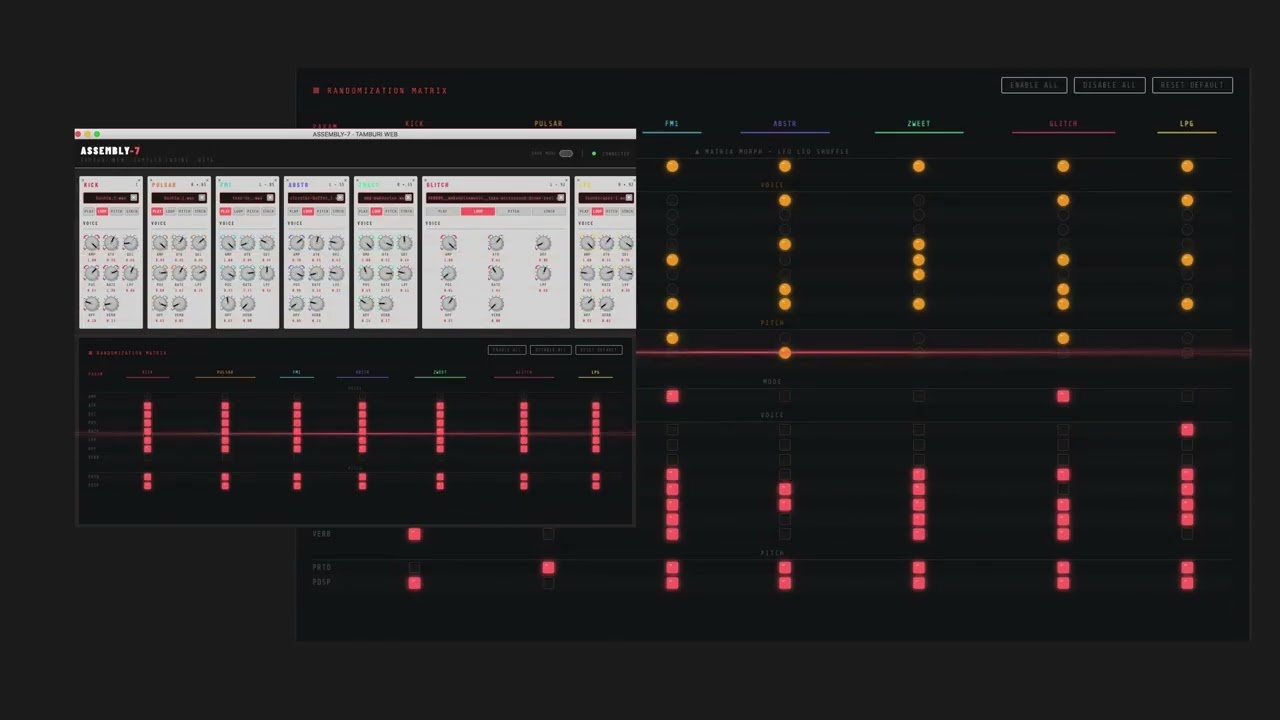
Sample loading, playback modes, real-time randomization and LFO — Engine 7 in action from first file to full polymetric session.
Installation guide
Step-by-step setup: Node.js install, launch order, sample loading, modes reference, stem recording, macOS & Windows. Everything needed to get running in under 10 minutes.
Part of the engine system
Engine 7 sits alongside the existing synthesis engines. All engines share the same sequencer and OSC architecture — swap between them by loading a different SuperCollider file.
Get ASSEMBLY-7
Already own it? Engine 7 is a free update — download from your Gumroad library.
New to ASSEMBLY-7? Engine 7 is included.